If you’re weighing an electric vs manual hospital bed for a home, the honest answer is that most families end up choosing based on who adjusts the bed and how often — not on price alone. Manual beds typically run $400–$1,500, semi-electric models $700–$2,500, and fully electric beds $1,200–$6,000 depending on features, frame type, and whether a mattress is included. This guide breaks down the real differences so you can decide with confidence.
Key Takeaways

Photo: www.apollohomecare.com on Google
- Electric beds win on caregiver safety — no bending, cranking, or straining to reposition a patient.
- Manual beds cost less upfront but require physical effort every single time the head, knees, or height changes.
- Semi-electric is the middle ground: electric head and foot, manual height adjustment.
- Medicare and most insurers cover a hospital bed only when a doctor documents medical necessity — typically a semi-electric model.
- Weight capacity, mattress type, and rail compatibility matter more than the motor for long-term comfort.
- Manual beds are better for power outages, travel, and tight budgets; electric beds are better for daily, hands-on caregiving.
What Counts as a Hospital Bed
A hospital bed isn’t just a bed that moves. The FDA recognizes hospital beds as medical devices with specific design requirements, including adjustable height, head and knee articulation, side rails, and caster locks. That regulatory framing matters because it affects what you can buy, how it ships, and whether insurance will pay.
Three adjustments define the category:
- Head elevation (Fowler position) — raises the upper body for breathing, eating, or reflux.
- Knee/leg elevation — takes pressure off the lower back and improves circulation.
- Height adjustment (Hi-Lo) — raises or lowers the whole mattress deck so a caregiver can work at a safe height.
Manual beds usually control one or two of these. Electric beds control all three.
Electric vs Manual Hospital Bed: The Core Difference
The real distinction is who supplies the force. On a manual bed, a crank handle or lever transfers your muscle power to a gear mechanism. On an electric bed, a linear actuator — a motor-driven piston — does the work when you press a hand control or pendant.
That single mechanical difference cascades into everything else: cost, weight, setup, maintenance, and how caregiving actually feels day to day.
How Manual Beds Work
Manual beds use hand cranks, usually one for the head and one for the knees, sometimes a third for height. You turn the crank clockwise to raise a section and counterclockwise to lower it. The mechanism is simple, repairable, and doesn’t need electricity.
The trade-off is effort. Raising a patient’s head from flat to sitting can take 15–30 turns of a crank, and you’re doing it while standing at the foot or side of the bed. For occasional adjustments, that’s fine. For a dozen adjustments a day, it’s exhausting.
A two-crank frame such as the ST2002-2RW stainless manual bed covers head and knee positions without any power. See all manual hospital beds.

How Electric Beds Work
Electric beds use motors powered by a standard wall outlet. A pendant control — the handheld remote — lets the patient or caregiver adjust positions with a button press. Many models include a battery backup so the bed can still move during a power outage.
Higher-end models add features like Trendelenburg positioning, cardiac chair positioning, and programmable memory settings. These are genuinely useful for specific medical situations but add cost and complexity.
For daily home nursing, an electric profiling bed like the ST2000E electric nursing bed lets caregivers adjust positions with a hand control.

Semi-Electric: The Option Most People Miss
Most people frame this as a two-way choice, but there’s a third category that fits a huge number of home-care situations.
| Type | Head & Knee | Height (Hi-Lo) | Typical Price | Best For |
|---|---|---|---|---|
| Manual | Crank | Crank | $400–$1,500 | Tight budgets, backup beds, infrequent use |
| Semi-electric | Electric | Crank | $700–$2,500 | Most home caregivers; common insurance model |
| Fully electric | Electric | Electric | $1,200–$6,000 | Daily care, bariatric needs, professional caregivers |
Semi-electric beds give you the adjustment you’ll make most often — head and knee — with a motor, while keeping the less-frequent height change manual. That’s why semi-electric is the model insurers most commonly reimburse.
Cost Comparison: What You’ll Actually Pay

Photo: sehaaonline.com on Google
| Cost Category | Manual | Semi-Electric | Fully Electric |
|---|---|---|---|
| Bed frame only | $400–$1,500 | $700–$2,500 | $1,200–$6,000 |
| Mattress (if not included) | $100–$400 | $150–$500 | $200–$800 |
| Delivery/setup | $0–$150 | $0–$200 | $0–$300 |
| Replacement motor/parts | Rare | $80–$250 | $100–$350 |
| Monthly rental (typical) | $50–$150 | $75–$200 | $100–$300 |
Pro Tip: If you’re comparing rental versus purchase, add up 12 months of rental. If it exceeds the purchase price, buying usually makes more financial sense — especially if you’ll need the bed for more than a year.
Caregiver Safety and Physical Strain
This is where the decision often gets made for you. Caregivers who crank a manual bed multiple times a day risk back, shoulder, and wrist strain. The U.S. Bureau of Labor Statistics consistently ranks nursing assistants and home health aides among occupations with high rates of musculoskeletal injury — and manual patient handling is a major contributor.
Electric beds reduce that risk because the motor does the lifting. A caregiver can raise the head, adjust the knees, and set the height to a comfortable working position without ever leaning over or cranking.
When Manual Beds Are Actually Safer
Manual beds have one real safety advantage: they work without power. In a prolonged outage, an electric bed with a dead battery backup is stuck in whatever position it’s in. A manual bed always moves.
If you live in an area with frequent or long outages, that’s worth weighing.
Power, Placement, and Setup
Before you buy either type, check your space and your electrical setup.
- Outlet access — Electric beds need a grounded outlet within cord reach; extension cords aren’t recommended for motorized medical equipment.
- Room clearance — You need roughly 3 feet on the working side for a caregiver to move safely.
- Doorway width — Assembled hospital beds often don’t fit through standard interior doors; many ship partially disassembled.
- Floor type — Casters roll easily on hard floors; carpet may need locking casters or a bed with wider wheels.
Battery Backup Matters More Than You Think
If you go electric, look specifically for a bed with a battery backup or a manual override. Some models include a crank that engages if the motor fails. That combination — electric convenience plus manual fallback — is the most resilient setup.
Mattress and Frame Compatibility
The bed frame and the mattress are a system, not two separate purchases.
- Hospital mattresses are typically 36 inches wide and 80 inches long — sized to fit standard hospital bed decks.
- Pressure-redistribution mattresses (foam, alternating pressure, or low-air-loss) matter for anyone at risk of pressure injuries.
- Side rails must match the bed’s rail-mount style; incompatible rails are a known entrapment hazard.
- Weight capacity ranges from about 250 lbs on basic manual frames to 600+ lbs on bariatric electric models.
The FDA publishes guidance on hospital bed rail entrapment risks, and it’s worth reading before you mix and match components from different manufacturers.
Not sure which surface to pair with the frame? Our guide to medical mattress types compares foam, air and anti-bedsore options.
Insurance, Medicare, and Rentals
Coverage usually hinges on documented medical necessity — a doctor’s order stating the bed is required to treat a condition, not just for comfort.
- Medicare Part B may cover a semi-electric hospital bed when medical necessity is documented; manual and fully electric beds are covered less often.
- Medicaid varies by state.
- Private insurance often follows Medicare’s logic but with its own prior-authorization rules.
- Rentals are common for short-term recovery and often convert to purchase after a set period.
Warning: Never buy a bed assuming reimbursement will follow. Get written confirmation of coverage before you purchase, or you may be paying out of pocket for a bed you could have rented.
Which One Should You Buy?
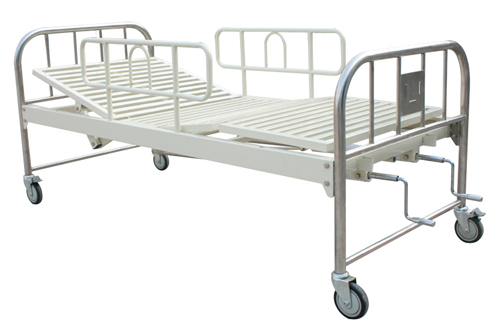
Photo: aomaalliance.com on Google
Work through these questions in order:
- Who adjusts the bed? If a caregiver does it daily, go electric or semi-electric.
- How long will you need it? Short-term recovery favors rental; long-term favors purchase.
- Is there reliable power? Frequent outages favor manual or a battery-backup electric model.
- What’s the budget? Manual under $1,500; semi-electric $700–$2,500; fully electric $1,200–$6,000.
- Does insurance cover it? If yes, buy the model they’ll reimburse — usually semi-electric.
Choose Manual If…
- Budget is the primary constraint
- The bed is a backup or used infrequently
- You need something that works without electricity
- The patient can reposition themselves or needs only occasional adjustment
Choose Electric If…
- A caregiver adjusts the bed daily
- The patient has limited mobility or needs frequent repositioning
- You want to reduce caregiver injury risk
- You need Trendelenburg or cardiac chair positioning
Choose Semi-Electric If…
- You want electric head and knee but don’t need powered height
- Insurance is covering part of the cost
- You want the best balance of price and convenience
You can compare manual, electric and home care beds in our full hospital bed range.
Frequently Asked Questions
Can a manual hospital bed be converted to electric?
Generally no. The frame, gearing, and mounting points differ between manual and electric models. Retrofitting motors isn’t practical or safe, and it voids any warranty. If you want electric adjustment, buy an electric or semi-electric bed from the start rather than trying to upgrade later.
Does Medicare pay for a fully electric hospital bed?
Medicare Part B typically covers a semi-electric bed when a doctor documents medical necessity. Fully electric beds are usually covered only when powered height adjustment is itself medically required — for example, when a caregiver needs it to safely provide care. Always confirm coverage in writing before purchasing.
How much does a hospital bed weigh?
Manual beds commonly weigh 100–150 lbs; electric beds run 150–250 lbs, and bariatric models can exceed 400 lbs. Weight affects delivery, setup, and whether you can move the bed between rooms. Check the shipping weight, not just the frame weight, before ordering.
Are electric hospital beds safe during a power outage?
Only if they have a battery backup or manual override. Many electric beds include a backup battery that allows limited movement during an outage. If yours doesn’t, the bed stays in its current position until power returns. Manual beds are unaffected by outages.
What size mattress fits a hospital bed?
Most hospital beds use a 36-inch by 80-inch mattress, though bariatric frames take wider sizes. Always match the mattress to the specific frame’s deck dimensions and weight rating. A mismatched mattress can create gaps at the rails, which is a known entrapment risk.
Can I use a regular mattress on a hospital bed?
You can, but you generally shouldn’t. Standard mattresses aren’t designed to flex with an articulating deck, and they may not meet the frame’s safety specifications. Hospital-grade mattresses are built to bend, resist moisture, and work with side rails.
The Bottom Line on Buying
If a caregiver will be adjusting the bed most days, buy electric or semi-electric — the reduced strain and easier positioning are worth the price difference. If the bed is occasional, budget-constrained, or needs to work without power, a manual bed is a legitimate, durable choice.
Match the bed to how it will actually be used, confirm insurance coverage in writing, and check mattress and rail compatibility before you order. Start by writing down who will adjust the bed and how often — that single answer usually settles the electric vs manual question on its own.
Sourcing hospital beds for your market?
MOSTA MEDICAL is a CE and ISO certified factory in Guangdong, China, supplying distributors, hospitals and brand owners in 15+ countries. We offer factory-direct pricing and OEM/ODM branding.
Browse hospital beds · Email info@mostamedical.com · WhatsApp us for a quote