Getting the right wheelchair size comes down to two measurements taken while you sit still: seat width and seat depth, matched to your body within about an inch. A seat that’s too wide causes pressure sores and poor posture; one that’s too narrow causes bruising and skin breakdown. This guide gives you the numbers, the charts, and the step-by-step method to get both right the first time.
Key Takeaways
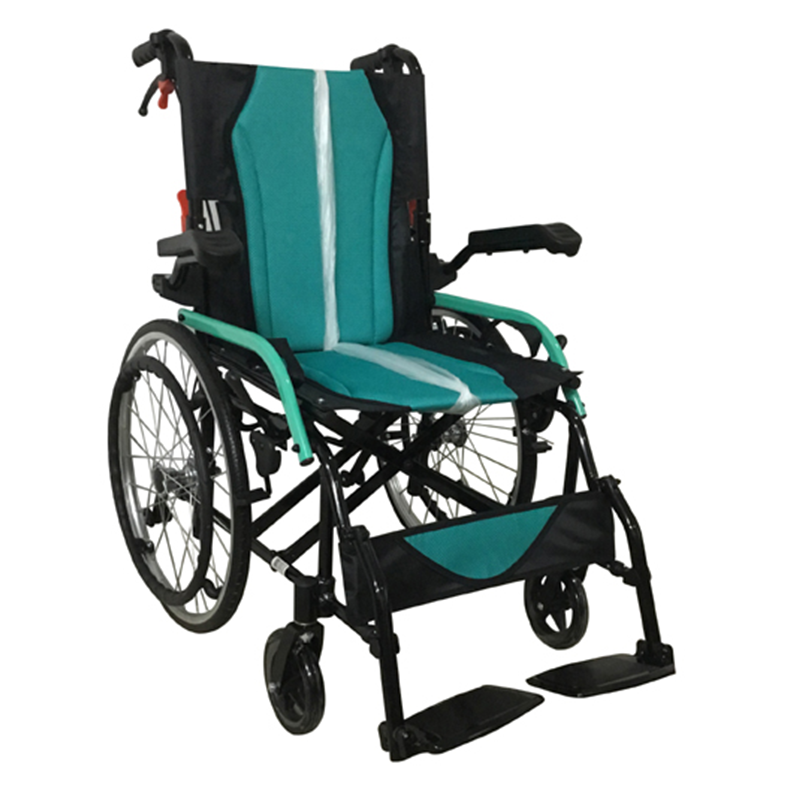
Photo: www.freedommobilitysolutions.com on Google
- Measure seat width across the widest point of your hips or thighs, then add 1 to 2 inches — never more.
- Measure seat depth from the back of your buttocks to the back of your knee, then subtract 1 to 2 inches.
- Standard adult wheelchairs come in 16″, 18″, and 20″ seat widths; 18″ fits the largest share of adults.
- A seat that is 2 inches too wide is worse than one that is 1 inch too narrow for long-term use.
- Always measure with the cushion you’ll actually use, and re-measure after any weight change of 10 pounds or more.
- If your measurements fall between two sizes, size down on width and up on depth only if your knees clear the cushion.
Why Seat Width and Depth Matter
Seat width and depth aren’t comfort preferences — they’re the two dimensions that decide whether your wheelchair supports you or slowly injures you. Seat width controls how much your trunk can sway side to side and how much weight lands on your ischial tuberosities (the two sitting bones). Seat depth controls where the front edge of the seat lands relative to the back of your knee, which in turn controls circulation in your lower legs.
When a seat is too wide, you slide around, your spine curves to one side to find stability, and your push stroke becomes inefficient because your shoulders are angled outward. When a seat is too narrow, the side frames press into your hips and thighs, and every transfer becomes a scrape. Neither problem shows up in the first week. Both show up in the first year.
Depth errors are just as costly. Too short a seat puts all your weight on a smaller area, concentrating pressure. Too long a seat presses the front edge into the back of your calves, which restricts blood flow and pushes your pelvis forward into a posterior pelvic tilt.
How to Measure Seat Width at Home
Measure seat width while seated, not standing. Standing measurements miss the spread of the hips and thighs that happens under load.
- Sit on a firm, flat chair with your feet flat on the floor and your knees at 90 degrees.
- Have a helper run a tape measure across the widest point of your hips — usually at the greater trochanters, the bony bumps on the outside of your upper thighs.
- Write that number down in inches.
- Add 1 inch for a snug fit, or 2 inches if you wear bulky clothing, use a thick cushion, or need room for a lateral support pad.
- Round up to the nearest available chair size only if you’re within a half inch of it.
If you can’t measure seated, measure hip width while lying on your side and add 1 inch. It’s less accurate but workable.
Pro Tip: Measure at the end of the day, not first thing in the morning. Soft tissue spreads slightly over the course of the day, and an evening measurement gives you the wider, safer number.
How to Measure Seat Depth at Home
Seat depth is the measurement most people get wrong, because they measure to the wrong landmark. You’re measuring to the back of the knee (the popliteal fossa), not to the calf and not to the heel.
- Sit in the same firm chair, back against the backrest, feet flat.
- Measure from the rearmost point of your buttocks — where your back meets the seat — to the crease at the back of your knee.
- Subtract 1 to 2 inches. That gap is what keeps the seat edge off your calf.
- If you use a backrest cushion or a back support, measure with it in place, because it pushes you forward.
A useful cross-check: once seated in the actual wheelchair, you should be able to slide two to three fingers between the back of your knee and the front edge of the seat cushion. More than three fingers means the seat is too short; fewer than two means it’s too long.
Seat Width and Depth Chart
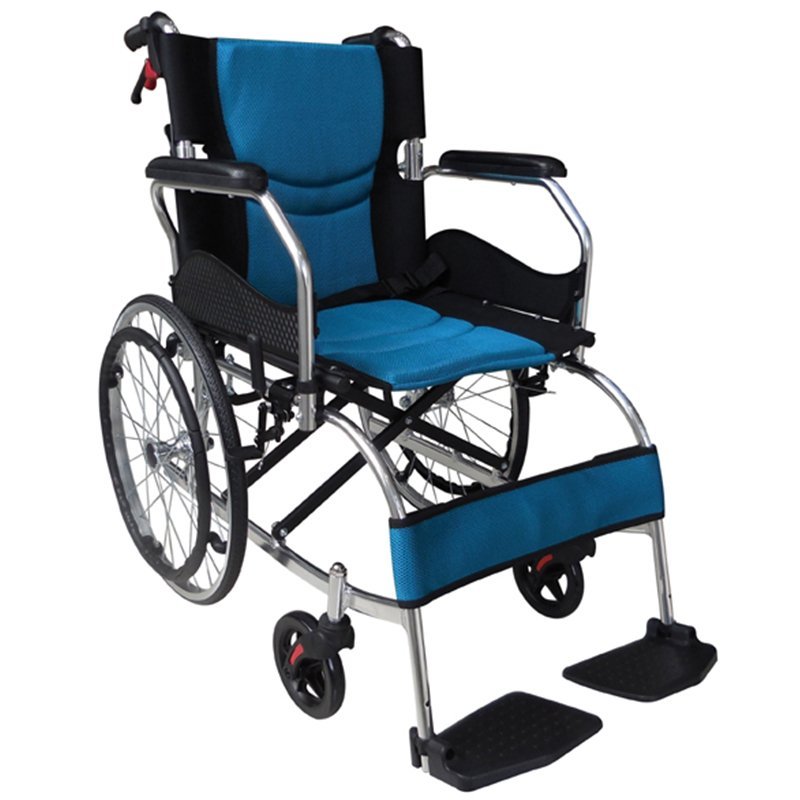
Photo: www.healthyjeenasikho.com on Google
Use this chart as a starting point, then confirm with your own measurements. All figures are in inches.
| Hip/Thigh Width (measured) | Recommended Seat Width | Typical Chair Size | Notes |
|---|---|---|---|
| 14″–15″ | 16″ | 16″ standard | Common for smaller adults and teens |
| 15″–16″ | 16″–17″ | 16″ or 17″ | 17″ often a custom or sport option |
| 16″–17″ | 18″ | 18″ standard | The most common adult size |
| 17″–18″ | 18″–19″ | 18″ or 19″ | 19″ usually custom-built |
| 18″–19″ | 20″ | 20″ standard | Bariatric and heavy-duty lines start here |
| 19″–21″ | 20″–22″ | 20″–22″ | 22″ and above are typically bariatric frames |
| Buttock-to-Knee Length (measured) | Recommended Seat Depth | Notes |
|---|---|---|
| 15″–16″ | 16″ | Common on pediatric and small adult chairs |
| 16″–17″ | 16″ | Snug; verify two-finger gap |
| 17″–18″ | 16″–17″ | 17″ often custom |
| 18″–19″ | 18″ | Standard adult depth |
| 19″–20″ | 18″–19″ | 19″ typically custom |
| 20″–22″ | 20″ | Bariatric and heavy-duty frames |
Note that seat width and seat depth are independent. You can be an 18″ wide by 16″ deep, or a 16″ wide by 18″ deep. Never assume that a wider chair is also a deeper chair.
As a reference, the ST6402-46BF medical wheelchair has a 46 cm seat width, a common standard adult size.

Other Measurements That Affect Fit
Width and depth get you 80 percent of the way. These four numbers close the gap.
- Seat-to-floor height: Measure from the floor to the top of the seat cushion at the front edge. Standard is 19″–21″. A higher seat helps with transfers; a lower seat helps you reach the floor to propel with your feet.
- Back height: Measure from the seat surface to the top of your shoulder blade for a standard back, or to mid-shoulder for a high back. A back that’s too tall blocks your push stroke.
- Armrest height: With your arms relaxed at your sides and elbows at 90 degrees, measure from the seat surface to the bottom of your forearm. Add 1 inch.
- Front rigging length: With your foot on the footrest, your knee should be level with or slightly below your hip, and your thigh should rest fully on the cushion with no gap under the knee.
If any of these four is off by more than an inch, the chair will feel wrong even when width and depth are perfect.
Standard vs. Custom Sizes
Standard wheelchairs are built in fixed sizes and ship in days. Custom wheelchairs are built to your exact numbers and ship in weeks.
| Feature | Standard | Custom / Built-to-Order |
|---|---|---|
| Sizes available | 16″, 18″, 20″ width; 16″, 18″ depth | Any width/depth, often in 1″ increments |
| Typical lead time | In stock to 2 weeks | 3–10 weeks |
| Cost range | $150–$600 | $1,500–$8,000+ |
| Frame type | Folding, steel or aluminum | Rigid or folding, titanium or aluminum |
| Best for | Part-time use, backup chairs, temporary need | Full-time users, specific postural needs |
| Insurance coverage | Often covered as durable medical equipment | Covered with documentation of medical necessity |
For anyone who spends more than four hours a day in a chair, the custom route usually pays for itself in reduced skin problems and fewer repairs. For occasional use, a standard 18″ x 16″ folding chair is a reasonable fit for a large share of adults.
Larger users may need a bariatric frame such as the ST6008-51ABU extra wide heavy duty wheelchair. Distributors who need non-standard sizes can order them through our OEM service.
When You Fall Between Two Sizes
This happens constantly, and there’s a correct way to resolve it.
- Between widths: Choose the narrower size if you’re within half an inch, provided your hips clear the side frames with the cushion in place. Choose the wider size only if you need the room for a lateral support, a thicker cushion, or clothing layers.
- Between depths: Choose the shorter depth. A seat that is 1 inch short is uncomfortable; a seat that is 1 inch long causes calf pressure and pelvic tilt.
- Between back heights: Choose the lower back for active users and the higher back for users with poor trunk control.
- Between seat heights: Choose based on how you transfer, not on how you sit. If you stand to transfer, a higher seat is easier on your shoulders.
Warning: Never accept a chair that’s more than 2 inches wider than your measured hip width, even if it’s free or immediately available. The long-term skin and posture costs outweigh the short-term convenience.
Fitting Checklist Before You Commit
Run this list before you sign anything or throw away the box.
- Sit in the chair for at least 15 minutes with your own cushion.
- Slide two to three fingers between the back of your knee and the seat edge.
- Confirm you can fit a flat hand between your hip and the side frame on both sides — not a fist.
- Check that your feet rest flat on the footrests with no pressure behind the knee.
- Push forward and back; your hips shouldn’t slide.
- Verify the chair’s weight capacity exceeds your weight by at least 50 pounds.
- Confirm the center of gravity lets you tip back onto the rear wheels with modest effort, if the chair is adjustable.
Weight matters for transport too. Browse our lightweight aluminum wheelchairs and commode wheelchairs, or see all medical wheelchairs.
Common Sizing Mistakes
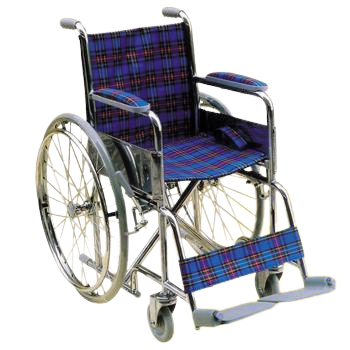
Photo: www.karmanhealthcare.com on Google
These are the errors that show up most often in fitting clinics.
- Measuring hip width while standing, which understates the seated width by 1 to 2 inches.
- Measuring depth to the calf instead of the back of the knee, producing a seat that is 2 inches too long.
- Adding 3 or 4 inches of “growing room” for a child, which creates a chair the child can’t propel.
- Ignoring the cushion. A 3-inch foam cushion raises your seated height and changes your effective depth.
- Buying a bariatric frame for a user who simply needs a 20″ standard width.
- Forgetting that a tilt-in-space or reclining chair changes the effective seat depth as the chair tilts.
Children need a frame built for their size, such as the ST6005-35 children’s wheelchair, rather than an adult chair with extra padding.
Frequently Asked Questions
What is the most common wheelchair seat width?
Eighteen inches is the most common adult seat width, followed by 16 inches and 20 inches. Most standard folding wheelchairs are sold in those three widths. If your measured hip width is 16 to 17 inches, an 18-inch seat is usually correct.
How do I know if my wheelchair seat is too wide?
You’ll slide side to side when you push, your elbows will angle outward to reach the wheels, and you’ll feel pressure on the outer edges of your hips. A quick test: if you can fit more than a flat hand between your hip and the side frame, the seat is too wide.
Can a wheelchair seat be too deep?
Yes. A seat that’s too deep presses the front edge into the back of your calves, which restricts circulation and pushes your pelvis into a posterior tilt. You’ll also have trouble reaching the wheels. Keep a two-to-three-finger gap behind the knee.
Do I measure for a wheelchair sitting or standing?
Always measure sitting, with your feet flat and your knees at 90 degrees. Seated measurements capture how your hips and thighs actually spread under your body weight. Standing measurements typically come out 1 to 2 inches too narrow.
How often should I re-measure for a wheelchair?
Re-measure any time your weight changes by 10 pounds or more, after surgery, after a pregnancy, or if you notice new redness or pressure marks on your hips or thighs. For children, re-measure every six months during growth spurts.
Does insurance cover a custom-sized wheelchair?
Medicare and most private insurers cover wheelchairs as durable medical equipment when a physician documents medical necessity. Custom and ultralight chairs generally require additional documentation, including a seating evaluation. Check the current coverage rules directly with your plan before ordering.
Getting a Professional Seating Evaluation
If you’re a full-time wheelchair user, have a spinal cord injury, or have any history of pressure sores, get a seating evaluation from a physical or occupational therapist who specializes in wheelchair seating. These evaluations are typically covered by insurance when ordered by a physician, and they include pressure mapping, posture assessment, and a trial of several chair and cushion combinations. The measurement method in this article gets most people close; a seating clinic gets you exact.
Start by measuring your hip width and buttock-to-knee length today, write both numbers down, and take them with you to your next appointment or your next online order. Those two numbers are the difference between a chair you tolerate and a chair that works.
Sourcing wheelchairs in multiple seat sizes for your market?
MOSTA MEDICAL is a CE and ISO certified factory in Guangdong, China, supplying distributors, hospitals and brand owners in 15+ countries. We offer factory-direct pricing and OEM/ODM branding.
Browse our wheelchair range · Email info@mostamedical.com · WhatsApp us for a quote