For most people, a foam medical mattress is the best choice. It costs less, needs no pump, and works well for mild to moderate bed-rest needs. If you’re helping someone with existing pressure sores, or they’re at high risk of getting them, an air mattress wins instead. Anti-bedsore is a feature, not a separate type — it can sit inside foam or air. Check the maker’s own spec sheet for weight limits before you buy.
Foam vs air vs anti-bedsore: how they compare
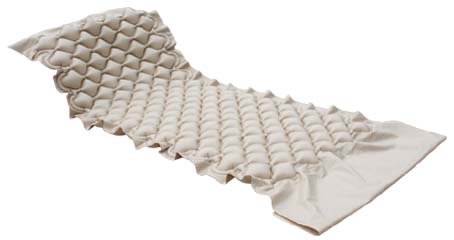
Photo: www.senyangcare.co.uk on Google
Foam does it with layers of varying density. Air does it by adjusting pressure inside cells. Anti-bedsore is the goal both are trying to reach, and it shows up as a design feature on either one. Here’s how they line up side by side.
| Method | How long | Effort | Cost | Best for |
|---|---|---|---|---|
| Standard foam | 3-5 years | Low | Low | Short recovery, mild needs |
| High-density foam | 5-7 years | Low | Medium | Long bed rest, moderate risk |
| Static air overlay | 2-4 years | Medium | Medium | Adding pressure relief to an existing bed |
| Powered air mattress | 5-8 years | High | High | High risk, existing sores |
Foam needs no setup and no power. Air needs a pump, a power outlet, and regular checks. A powered air mattress cycles pressure on and off, which is why it costs more and takes more looking after. Standard foam is the cheapest and the easiest, but it flattens faster under a heavy user.
If the person weighs more than the mattress is rated for, every column above changes — the lifespan drops, the support fails, and the cost goes up because you’re replacing it sooner. Always read the maker’s weight rating before you compare.
How a foam medical mattress works
A foam medical mattress uses layers of foam with different densities. The top layer is soft to spread pressure. The bottom layer is firm to hold the body steady. Some add a gel or memory layer on top for extra comfort.
- Measure the bed frame first. Standard sizes are 36 x 80 inches (twin) or 54 x 75 inches (full). A wrong size slides and gaps at the edges.
- Check the weight rating on the label. Most standard foam mattresses rate up to about 250 pounds; high-density versions go higher. If the user is over that, step up a level.
- Let the mattress expand for 24 to 48 hours after unboxing. It ships compressed and needs time to reach full height.
- Rotate it head-to-foot every 2 to 3 months. This spreads wear and keeps the surface even.
- Wipe the cover with a mild cleaner weekly, and keep a waterproof sheet on it.
Foam is good at low cost, no power, and simple care. Its weakness is heat and moisture — foam traps both, and that’s hard on skin. If the person has an open wound or a diagnosed pressure ulcer, this isn’t a DIY pick. Ask a wound-care nurse or physical therapist which surface fits the case.
Measure the deck of the bed before you order. A mattress that is too narrow or too short leaves gaps at the rails. This applies to both manual hospital beds and home care beds.
How an air medical mattress works
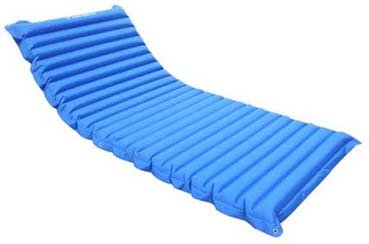
Photo: www.senyangcare.co.uk on Google
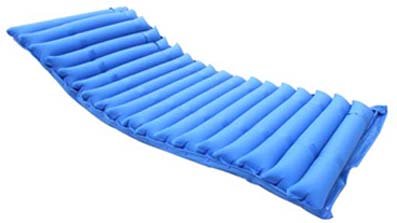
An air medical mattress holds air in cells or tubes. Static versions stay firm once filled. Powered versions inflate and deflate cells in a cycle, so no single spot takes pressure for long. That cycling is the main reason powered air mattresses help with pressure relief.
- Place the air cells or overlay on the bed frame, then connect the pump hose to the inlet port.
- Set the pump to the user’s weight. Most pumps have a dial or a soft-to-firm range; start in the middle and adjust over the first night.
- Inflate fully, then check by hand. You want the body to sink about 1 to 1.5 inches — not touching the frame below.
- For a powered mattress, set the cycle time. Most run a 10 to 20 minute cycle; check the maker’s manual for the setting that fits the model.
- Check the pressure every morning. Air leaks and temperature changes shift it overnight.
Two checks tell you whether the setup is right. First, slide a flat hand under the heaviest part of the body — the heels, the base of the spine, the back of the head. If you can slide it in and out without lifting that part, the cell is doing its job.
If the hand won’t go in, add air. Second, look at the skin each morning for the first two weeks. Red patches that fade within an hour of getting up are normal. Patches that are still there at lunchtime mean the pressure is too high or the cycle is too slow.
Air mattresses are good at adjustable pressure and weight spread — key for people who can’t turn themselves. The weakness is dependence on power and a pump. A power cut or a failed pump leaves a soft, flat surface, so keep a manual pump as backup.
Choosing the right medical mattress type
Pick by risk level first, then by budget. A person who’s up and moving within a few days doesn’t need a powered air mattress. Someone who’s bed-bound for weeks, or already has a sore, does. Here’s how that plays out in three common situations.
When you’re in a hurry
Go with a high-density foam mattress. It arrives ready, needs no pump or power, and you can set it up in minutes. The trade-off is less pressure relief than air, so it’s a short-term fix, not a long-term one.
A foam mattress is also the right answer if the room has no outlet near the bed, or if the person can’t tolerate the hum of a pump at night. Both are common reasons people buy air and then stop using it.
When you’re doing this for the first time
Start with a standard or high-density foam mattress. It’s the simplest to run, the cheapest to replace, and it teaches you what the person actually needs. If skin issues appear, you’ll know it’s time to move up to air.
Give it two weeks before you judge it. If redness shows up on heels, hips or tailbone and fades within an hour of shifting position, the foam is still holding. If it’s still there at the next check, move up.
When you want the best possible result
Choose a powered air mattress with a pressure-cycling pump. It gives the most control over pressure points and suits high-risk users. The trade-off is cost, a power source, and more daily checking — you’re trading simplicity for performance.
Check the pump’s cycle time before you buy. A slow cycle is gentler on fragile skin; a fast one suits someone who can still shift themselves. Ask which setting the pump defaults to after a power cut, because that’s the one you’ll wake up to.
You can compare foam and air options side by side in our medical mattress range.
What applies no matter which type you pick

Photo: www.walmart.com on Google
Whichever surface you choose, a few things decide whether it actually works. Pressure relief only happens if the person’s position changes. No mattress replaces turning and repositioning — that’s the core of pressure-ulcer care, and the U.S. Agency for Healthcare Research and Quality publishes guidance on it.
Before you buy, measure the bed frame and check the weight rating. Write down the user’s weight and any existing skin issues. A mattress rated below the user’s weight won’t hold its shape, and that’s money wasted.
If the user is close to the top of a mattress’s weight range, size up rather than down. A rating with no headroom wears out faster at the hips and shoulders, which are the spots doing the work.
Partway through, check the skin daily — heels, hips, tailbone, and shoulder blades. Red patches that don’t fade within 30 minutes of moving are a warning sign. Stop and call the care team. A patch that fades in 10 or 15 minutes is usually just pressure from one position; note where it was and mention it at the next check.
At the end, clean and dry the mattress before storage. Keep foam flat, not folded. Store air mattresses partly inflated to protect the cells. If the person has a diagnosed pressure ulcer, this is a clinical matter — bring in a wound-care nurse rather than picking a surface yourself.
The bed frame matters as much as the mattress. If you are still choosing one, read our guide to electric vs manual hospital beds.
Frequently asked questions
How long does a medical mattress last?
A standard foam mattress has a limited lifespan; high-density foam lasts longer. Air mattresses last several years if the pump holds. These figures assume normal use at the rated weight — heavier users wear any mattress faster, so check the maker’s rating for your case.
Is a foam or air mattress better for bed sores?
Air is better for existing or high-risk bed sores, because powered air cycles pressure off each spot. Foam helps with prevention at lower risk. For an open sore, don’t choose alone — a wound-care nurse or physical therapist should match the surface to the wound stage.
Can I use a regular mattress topper instead?
No, a standard topper isn’t a medical mattress. It adds softness but doesn’t spread pressure the way a rated medical surface does. For short recovery or mild comfort, a topper can help. For bed-bound care or sore prevention, use a mattress rated for that job.
What weight can a medical mattress hold?
Most standard foam mattresses rate up to about 250 pounds. High-density foam and air mattresses go higher, often 300 to 350 pounds or more. The exact figure is on the maker’s label — always check it, because a mattress used over its rating loses support fast.
Do air mattresses need electricity all the time?
Yes, a powered air mattress needs a live outlet to run its pump and cycle. A power cut leaves it soft. Keep a manual pump as backup, and check the pressure each morning so you catch a slow leak before it becomes a problem.
How often should I check the person’s skin?
Check daily at minimum, and every 2 hours for turning if the person is high risk. Look at heels, hips, tailbone, and shoulder blades. A red patch that stays red 30 minutes after repositioning needs a care-team call — don’t wait for it to open.
Can I return a medical mattress if it doesn’t work?
It depends on the seller’s policy, not the mattress type. Many allow returns within a set window if unused and in original packaging. Check the return terms before you buy, and keep the box until you’re sure the surface fits the person’s needs.
Conclusion
A medical mattress only does part of the job — the rest is daily skin checks, regular turning, and matching the surface to the person’s real risk level. Start with foam if needs are mild, move to air if risk is high, and bring in a wound-care professional the moment skin changes appear.
Sourcing medical mattresses for your market?
MOSTA MEDICAL is a CE and ISO certified factory in Guangdong, China, supplying distributors, hospitals and brand owners in 15+ countries. We offer factory-direct pricing and OEM/ODM branding.
Browse medical mattresses · Email info@mostamedical.com · WhatsApp us for a quote